Pokémon GO Raid Math Explained: DPS, ER/TDO, STAB, Weather Boost & Damage Breakpoints
How our PvE rankings work under the hood: why raw DPS misleads on glass cannons, exact damage multipliers (1.6× / 2.56× / 1.2× STAB), and Fast Move Breakpoints.
1. The Exact Pokémon GO Damage Formula & Multiplier Stacking
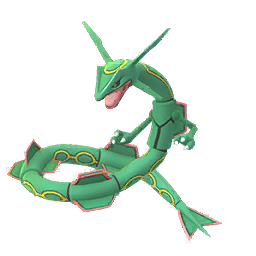 Rayquaza
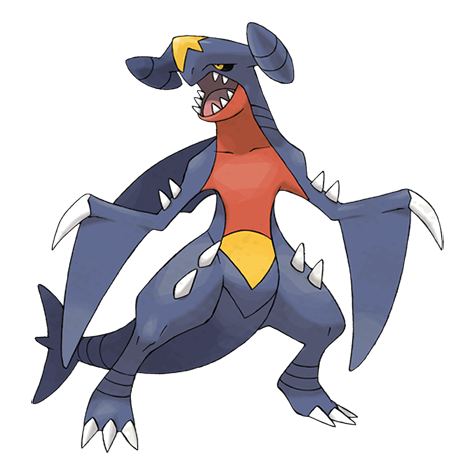
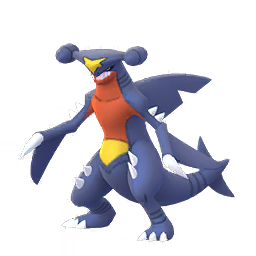 Garchomp
 Mamoswine
 Mega Lucario
Every single hit in Pokémon GO follows one deterministic formula: `Damage = floor(0.5 × Power × (Attack / Defense) × Multipliers) + 1`. All multipliers multiply together rather than adding:
Stacking all multipliers turns a single Ice move against Rayquaza into over 6.3× neutral damage!
2. Why Our Rankings Use ER ((DPS³ × TDO)^0.25) Instead of Raw DPS Alone
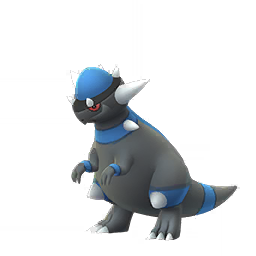 Rampardos
 Pheromosa
 Deoxys
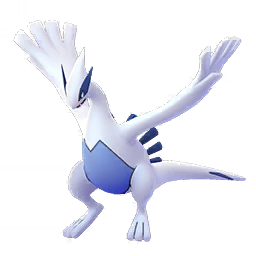 Lugia
Ranking raid attackers purely by raw DPS favors ultra-fragile glass cannons like Deoxys (Attack Forme) or Pheromosa, which faint in seconds, waste stored energy, and force time-consuming lobby relobbies. Ranking purely by TDO (Total Damage Output) favors sluggish tanks like Lugia or Blissey that time out the raid clock. That is why PoGo Events evaluates PvE attackers using ER (Equivalent Rating) = (DPS³ × TDO)^0.25—giving DPS a 3:1 speed weight while accurately penalizing fragile glass cannons that die before firing their Charged Moves.
3. Fast Move Breakpoints: How the `floor()` Rounding Step Saves Hundreds of Thousands of Stardust
Notice the `floor(...)` truncation in the damage formula! If your Fast Move evaluates to `11.95`, it deals exactly 11 damage. One single half-level power-up pushing that number to `12.01` jumps every Fast Move to 12 damage (an instant +9.1% Fast Move DPS spike!), whereas the next 6 power-ups might leave it flat at 12. Combined with diminishing CPM scaling—Level 30→40 adds only ~8% combat power and Level 40→50 adds just ~6% while quadrupling Stardust cost—bringing six counters to Level 35 beats maxing one counter to Level 50 by a mile.
4. Practical Raid Speedrunning: Pre-Built Battle Parties & Instant Max Revive Relobbies
Every second counts in tight Solo and Duo clears: